Buying Peptides Online? 10 Red Flags to Know
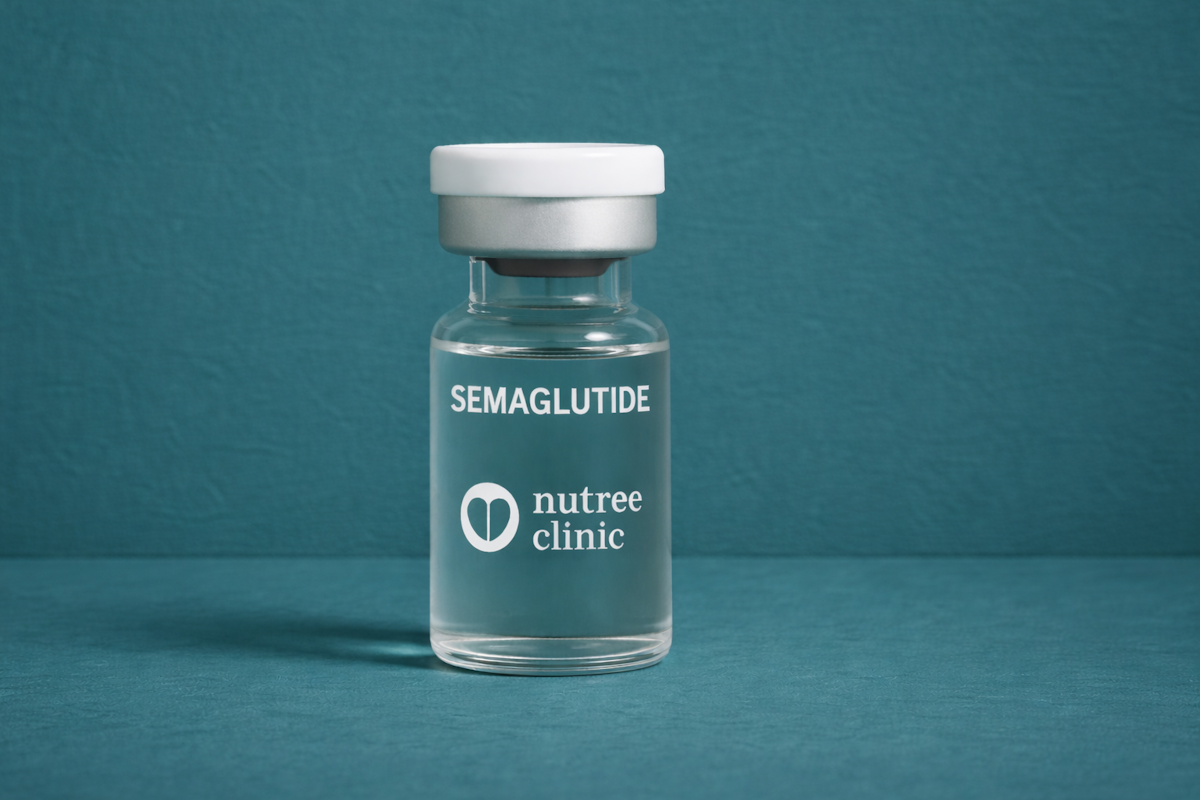
Peptide Safety / GLP-1 / NAD+ / Sermorelin
Buying Peptides Online? 10 Red Flags to Know Before You Inject Anything
Peptides and injectable wellness treatments are everywhere online. But before starting GLP-1 medication, NAD+, Sermorelin, or another peptide-based therapy, patients should know how to spot unsafe sourcing, unclear dosing, and care that is missing real medical oversight.
Online peptide programs have become incredibly popular. Patients are searching for GLP-1 medications like semaglutide and tirzepatide, as well as NAD+, Sermorelin, and other injectable therapies that may support weight, energy, recovery, and overall wellness.
Some programs are thoughtful, medically guided, and transparent. Others can feel convenient on the surface but leave patients with important unanswered questions: What exactly is in the vial? Where did it come from? Was it prepared by a licensed pharmacy? How long is it safe to use? Who do you contact if something feels wrong?
This guide is not meant to scare you. It is meant to help you make a safer decision. If you are going to inject something into your body, you deserve clarity, medical oversight, and real follow-up.
Considering peptide therapy with medical guidance?
Nutree Clinic offers clinician-guided care for eligible patients, with medical review, clear instructions, and follow-up designed around your body, goals, and tolerance.
Why peptide safety matters
Peptides are often marketed like wellness products, but many are injectable therapies that require careful handling. That means sterility, dosing accuracy, storage, pharmacy standards, and medical screening all matter.
With injectables, the concern is not only whether the product “works.” The bigger questions are whether the medication is sterile, accurately dosed, properly labeled, appropriately prescribed, and still within its safe-use window.
This is especially important with GLP-1 medications. The FDA has warned about dosing errors with some compounded injectable semaglutide products, including errors caused by confusion around units, concentrations, and syringes.
A safe program should never leave you guessing. Here are the 10 red flags to watch for before buying peptides online.
1. The product says “for research use only” or “not for human use”
This is one of the clearest red flags.
If a vial or package says “for research use only,” “not for human consumption,” “not for human use,” or similar wording, it should not be used as a personal medication. Those labels usually mean the product is being sold as a laboratory or research chemical, not as a regulated medication for patient treatment.
This is especially concerning if the product is sent by someone presenting themselves as a medical provider. Patients should not receive injectable medication for personal use with a label that says it is not intended for humans.
2. You do not receive the actual vial — only prefilled syringes
Some patients receive only prefilled syringes instead of the original vial. This can feel convenient, but it can also make it harder to verify what you are actually receiving.
If you do not have access to the vial or proper documentation, you may not be able to confirm the medication name, concentration, pharmacy, beyond-use date, storage instructions, or lot information.
This does not mean every prefilled syringe is automatically unsafe. In some medical settings, prefilled syringes may be prepared and labeled appropriately. The concern is when the patient has no transparency.
You should never feel like you are being asked to trust an unlabeled syringe without knowing exactly what is inside.
3. Your provider says you can use the same opened vial for several months
This should raise questions.
For many sterile multi-dose vials, the common standard is to discard the vial within a limited period after first puncture, often 28 days unless the manufacturer or pharmacy label gives a different instruction.
Some patients are told they can use the same vial for three or four months. Even if the medication still looks normal, that does not prove it remains sterile, stable, or potent.
Peptide-based therapies may be sensitive to time, temperature, light, repeated punctures, and storage conditions. If the vial is being used far beyond the appropriate window, patients may be exposed to reduced potency or contamination risk.
Ask your provider:
- What is the beyond-use date?
- What is the discard date after first puncture?
- Is this a single-dose or multi-dose vial?
- Does the pharmacy label confirm these instructions?
4. The vial label is unclear or incomplete
A medication label should not be mysterious. You should be able to clearly understand what is in the vial and how it should be used.
Be cautious if the label does not clearly show:
- the medication or peptide name,
- the concentration,
- the patient’s name when patient-specific,
- the prescriber or pharmacy information,
- the beyond-use date,
- storage instructions,
- and route of administration.
This is especially important for GLP-1 medications because the same number of syringe “units” can mean different medication amounts depending on the concentration. A patient should understand the dose in medication terms, not only in syringe markings.
5. You are asked to mix powder with liquid yourself
Some online peptide sellers ship a powder with a separate liquid and instructions for the customer to mix it at home. This is often called reconstitution.
In regulated pharmacy settings, sterile injectable medications are prepared under controlled standards. At-home mixing from an online peptide vial can create risks, including contamination, incorrect dilution, incorrect dosing, and infection.
This is especially concerning when the product comes from a research-style website or has no licensed pharmacy label.
Patients should not be left to perform complex medication preparation without appropriate medical and pharmacy guidance.
6. The seller offers retatrutide or other unapproved “next-generation” peptides for personal use
Retatrutide is getting attention because of clinical research, but it is not FDA-approved for routine human treatment at this time. The same caution applies to other experimental peptides being sold online before they are approved for patient use.
A medication can be promising in studies and still not be appropriate to buy online for personal injection. When a product is not approved and is sold as a “research peptide,” the patient may be entering a gray zone with limited quality control, unclear legality, and no FDA-reviewed dosing or safety framework.
If a company implies that you can use a research-only product for weight loss, body composition, recovery, or anti-aging, that is a serious red flag.
7. The provider cannot clearly identify the pharmacy
A trustworthy peptide or injectable therapy program should be transparent about where medication comes from.
You should be able to know which pharmacy dispensed the medication, whether the pharmacy is licensed, how the medication should be stored, and who to contact with medication questions.
Be cautious if the answer is vague, such as “our private lab,” “our supplier,” “our source,” or “we handle that internally.”
Transparency matters. Patients deserve to know that their medication is coming from a legitimate medical supply chain, not an unknown gray-market source.
8. There is no real medical consultation
Peptides should not be treated like a simple online checkout product. A safe program should include a real medical intake and review by a licensed clinician.
For GLP-1 medications, a clinician should review your health history, weight history, current medications, contraindications, digestive symptoms, gallbladder history, pancreatitis history, goals, side effects, and follow-up plan.
For NAD+, Sermorelin, and other injectable therapies, a provider should still review your health background and decide whether the treatment makes sense for your body and your goals.
Be careful if the process is simply:
- choose a product,
- pay online,
- receive injections,
- and never have a meaningful medical review.
Medical care should feel personal, not transactional.
9. There is no follow-up after the medication arrives
Good peptide care does not stop when the package is delivered.
Patients may need help with side effects, injection technique, dose adjustments, storage questions, missed doses, or knowing when to pause treatment.
This is especially important with GLP-1 medications, where patients may experience nausea, constipation, dehydration, fatigue, appetite changes, or other symptoms that need guidance.
Before starting, ask:
- Who do I contact if I have side effects?
- How quickly will someone respond?
- Can my dose be adjusted?
- Will a clinician review my progress?
- What happens if the medication does not feel right for me?
10. The marketing sounds too good to be true
Responsible medicine should be encouraging, but it should also be honest.
Be cautious with claims like:
- “Guaranteed results.”
- “No side effects.”
- “Lose weight with no effort.”
- “Works for everyone.”
- “Reverse aging.”
- “Use more if you want faster results.”
Peptide therapy is not magic. Results depend on the person, the treatment, the dose, medical history, consistency, lifestyle, tolerance, and follow-up.
A responsible provider should explain the potential benefits, but also the limits, risks, and reasons a treatment may not be right for you.
What safer peptide care should look like
A safer peptide or injectable wellness program should include:
- a real medical intake,
- review by a licensed clinician,
- clear eligibility criteria,
- transparent medication sourcing,
- clear vial labeling,
- clear dose instructions,
- proper storage and shipping guidance,
- side effect education,
- and follow-up access to the care team.
The safest care is not just about receiving a product. It is about having medical support around that product.
Why patients choose Nutree Clinic
At Nutree Clinic, we believe peptide and injectable therapies should be handled with transparency, medical judgment, and ongoing support.
Our approach is built around real care:
- Medical review first: We start by understanding your health history, goals, and eligibility.
- Clear guidance: Patients should understand their plan, dosing, storage, and follow-up steps.
- Support that continues: Care does not stop after treatment begins. Adjustments and questions are part of the process.
- Honest expectations: We do not believe in overpromising. We believe in progress, safety, and care that feels human.
Whether a patient is exploring GLP-1 care, NAD+, Sermorelin, or another personalized wellness option, the goal is the same: care that is science-informed, medically guided, and adapted to the person in front of us.
Looking for peptide care you can actually understand?
Nutree Clinic helps eligible patients explore personalized treatment options with medical oversight, clear instructions, and follow-up designed around real life.
Frequently asked questions
What is the biggest red flag when buying peptides online?
One of the biggest red flags is a product labeled “for research use only” or “not for human use.” Patients should not inject products that are not labeled or dispensed for human treatment.
Is it safe to buy GLP-1 medications online?
It depends on the provider, pharmacy, medical screening, and follow-up. A safer GLP-1 program should include a licensed clinician, clear dosing, transparent sourcing, and support if side effects occur.
Should I be concerned if I only receive syringes?
It can be a concern if the syringes are not clearly labeled or if you cannot verify the original vial, concentration, pharmacy, storage instructions, or beyond-use date.
Can an opened peptide vial be used for months?
That should raise questions. Many sterile multi-dose vials are discarded within a limited period after first puncture, often 28 days unless the manufacturer or pharmacy specifies otherwise.
Is retatrutide approved for weight loss?
No. Retatrutide is still investigational and is not FDA-approved for routine human treatment at this time. Online sellers offering it for personal use should be approached with caution.
What makes Nutree Clinic a safer option?
Nutree Clinic focuses on medical review, clear patient education, transparent treatment guidance, and ongoing follow-up. Patients are guided through care instead of being treated like a one-time transaction.
Considering GLP-1, NAD+, or Sermorelin?
Nutree Clinic offers personalized wellness care with clinician guidance, eligibility review, and follow-up designed to help patients feel supported from the first consultation through every adjustment.
You may also like

References
- U.S. Food and Drug Administration. FDA’s Concerns with Unapproved GLP-1 Drugs Used for Weight Loss. Updated 2026.
- U.S. Food and Drug Administration. Understanding the Risks of Compounded Drugs. Updated 2026.
- U.S. Food and Drug Administration. FDA alerts health care providers, compounders, and patients of dosing errors associated with compounded injectable semaglutide products. Updated 2024.
- U.S. Food and Drug Administration. Compounding and the FDA: Questions and Answers. Updated 2025.
- Centers for Disease Control and Prevention. Injection Safety and Multi-Dose Vial Safety Guidance.
- United States Pharmacopeia. USP General Chapter <797> Pharmaceutical Compounding — Sterile Preparations.
Medical disclaimer: This content is for educational purposes only and does not provide medical advice, diagnosis, or treatment. Peptides, GLP-1 medications, NAD+, Sermorelin, and other injectable therapies may not be appropriate for everyone. Prescription treatments require review by a licensed clinician. Compounded medications are not FDA-approved and should be used only when clinically appropriate and dispensed through appropriate pharmacy channels. If you have side effects, severe symptoms, signs of infection, severe abdominal pain, vomiting, dehydration, allergic reaction, or concerns about a medication you received, contact a qualified medical professional promptly or seek urgent care.