What Are the Best Peptides for Mental Health?

What Are the Best Peptides for Mental Health? (And What They May Actually Change)
Peptide-based care is changing how clinicians approach mental health — not by replacing traditional therapies or medications, but by offering additional ways to address specific challenges like cravings, anxiety, addictions, cognitive fatigue, stress reactivity, and sleep quality.
Several of these therapies are already being used in clinical practice, each with a distinct role depending on the symptom being addressed.
Book your consultation Start a conversation
GLP-1 Peptides: Control Over Cravings and Addictions
GLP-1 peptides have shifted the conversation beyond weight loss. One of the most consistent patient-reported effects is a reduction in food noise — the constant mental pull toward food, cravings, and anticipatory thinking.
This reflects GLP-1’s action on reward and motivation pathways, particularly in how the brain processes cues, pleasure, and reinforcement. Patients often describe not just eating less, but thinking about food less — a meaningful behavioral shift.
Emerging research is extending this model beyond eating, exploring GLP-1’s role in addictive and impulse-driven behaviors. Clinically, this opens a broader discussion around control, not restriction.
Oxytocin: Precision Support for Situational Anxiety
Oxytocin is particularly relevant for patients who experience predictable spikes in anxiety — before social events, meetings, or high-stress interactions.
Rather than acting as a sedative, oxytocin supports nervous system regulation and social processing, helping patients feel more grounded and less reactive in the moment.
This makes it a targeted option for patients who do not need daily intervention, but benefit from situational support aligned with real-life triggers.
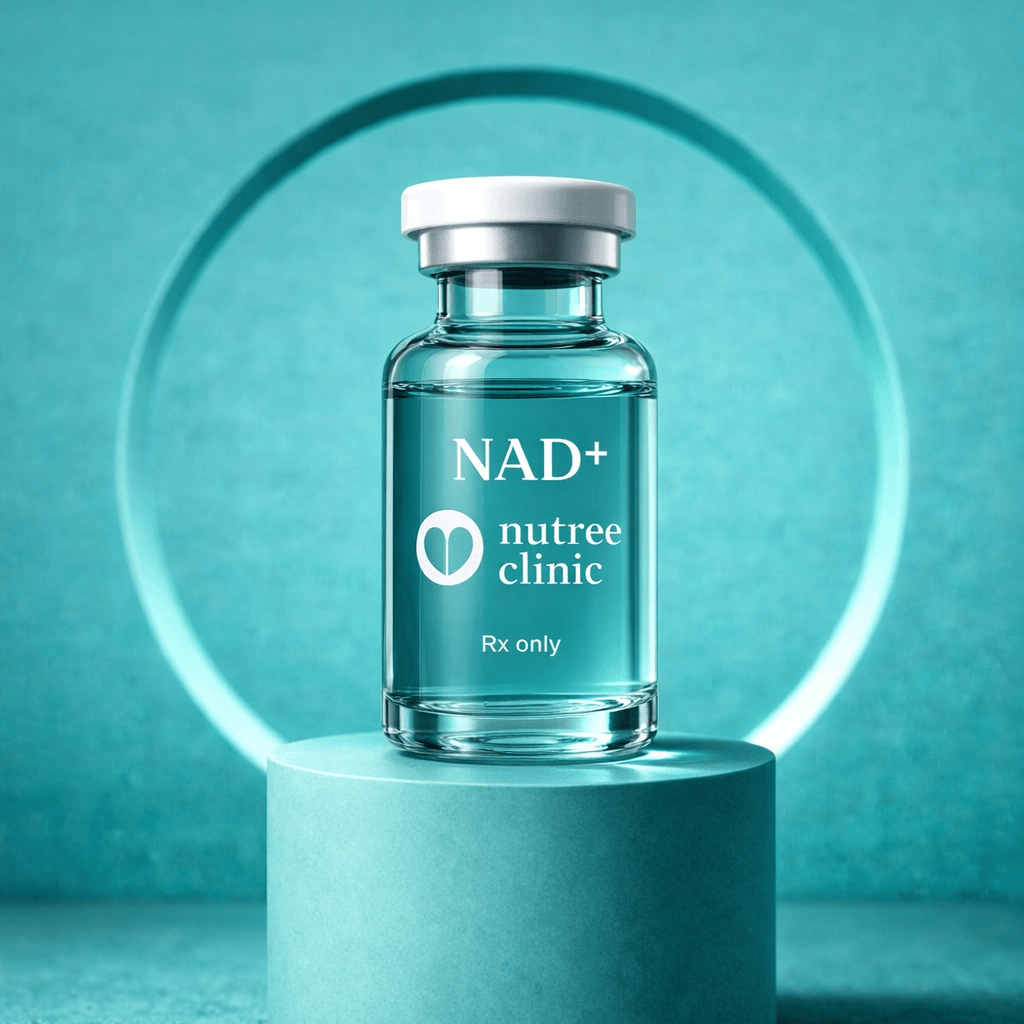
NAD+: Restoring Cognitive Energy
Cognitive function is energy-dependent. NAD+ plays a central role in mitochondrial activity and cellular energy production, making it highly relevant in patients experiencing brain fog or mental fatigue.
Recent research suggests meaningful potential for cognitive performance and fatigue, and clinically, patients often report improved clarity, sustained focus, and reduced mental drag.
This is particularly valuable in patients whose symptoms are more functional — low drive, poor concentration, and reduced mental endurance.
Sermorelin: Recovery as a Mental Health Lever
Sleep quality directly shapes mood, cognition, and resilience. Sermorelin supports natural growth hormone signaling, which is closely linked to deep sleep phases.
Improved sleep architecture can translate into better emotional stability, sharper thinking, and stronger daily recovery.
For many patients, this is not about sedation, but about restoring the body’s ability to recover effectively overnight.
How We Approach This at Nutree Clinic
At Nutree Clinic, these therapies are integrated into personalized, evolving protocols.
We combine clinical assessment, patient feedback, and ongoing adjustments to ensure treatments translate into real, measurable improvements in daily life.
Whether the goal is reducing cravings, improving focus, or stabilizing stress response, care is continuously refined to match the individual.
Let’s identify what’s driving your symptoms
Your care should be precise, personal, and effective.
Book your consultation Start a conversationYou may also like

References
- De Giorgi R, et al. GLP-1 receptor agonists in cognitive and mental health disorders. Nature Mental Health. 2025.
- Valenta S, et al. The impact of GLP-1 receptor agonists on mental health: a systematic review. Current Treatment Options in Psychiatry. 2024.
- Bruns N, et al. GLP-1 receptor agonists and substance use disorders: an emerging pharmacotherapeutic target. Pharmacological Research. 2024.
- Al-Aly Z, et al. GLP-1 receptor agonists and reduced risk of substance use disorders. BMJ. 2026.
- Qeadan F. Metabolic medicines and addiction: what GLP-1 receptor agonists might add to substance use care. BMJ. 2026.
- Quintana DS, Guastella AJ. An allostatic theory of oxytocin. Trends in Cognitive Sciences. 2020.
- Yoshino J, et al. Nicotinamide mononucleotide increases muscle insulin sensitivity in prediabetic women. Science. 2021.
- Verdin E. NAD⁺ in aging, metabolism, and neurodegeneration. Science. 2020.
- Van Cauter E, et al. Sleep and the regulation of human metabolism. Endocrine Reviews. 2020.
- Liu PY, et al. Growth hormone and aging: clinical implications. Endocrine Reviews. 2021.
Medical disclaimer: This content is for educational purposes only. Peptide therapies are not FDA-approved for the treatment of mental health conditions and must be prescribed and supervised by a licensed clinician. Research in these areas is still emerging, and outcomes may vary between individuals.